A meal-planning chat is useful when it reduces the decisions you need to make. It becomes less useful when it suggests seven unrelated dishes, assumes a full pantry or produces a shopping list you cannot trust.
Start with three meals rather than a whole month. The example here is fictional and intended for planning practice, not nutritional advice or a set of tested recipes.
In this article
In this article 6 sections
Give the plan real constraints
List the number of people, ingredients available, equipment, preparation time and foods you do not want. Distinguish a preference from an allergy or other safety requirement. Do not rely on generated suggestions to manage a medical diet or guarantee allergen safety.
Try this request:
Practice prompt
Plan three simple dinners for two adults using rice, one can of chickpeas, frozen peas and four carrots. We have a hob and microwave. Tuesday is busy; Wednesday allows more preparation. Reuse ingredients where practical. Give meal ideas and a list of additional ingredients, not invented local prices. Flag quantities you need me to confirm.
The phrase “one can” matters. Without it, the tool may use chickpeas in every meal as though the supply were unlimited. You still need to check whether the amount is suitable for the dishes and portions you choose.
Turn ideas into an ingredient ledger
Before making a shopping list, ask for a simple ledger: ingredient, amount required across chosen meals, amount already available and amount still needed. Treat every number as a draft to check against actual recipes and packages.
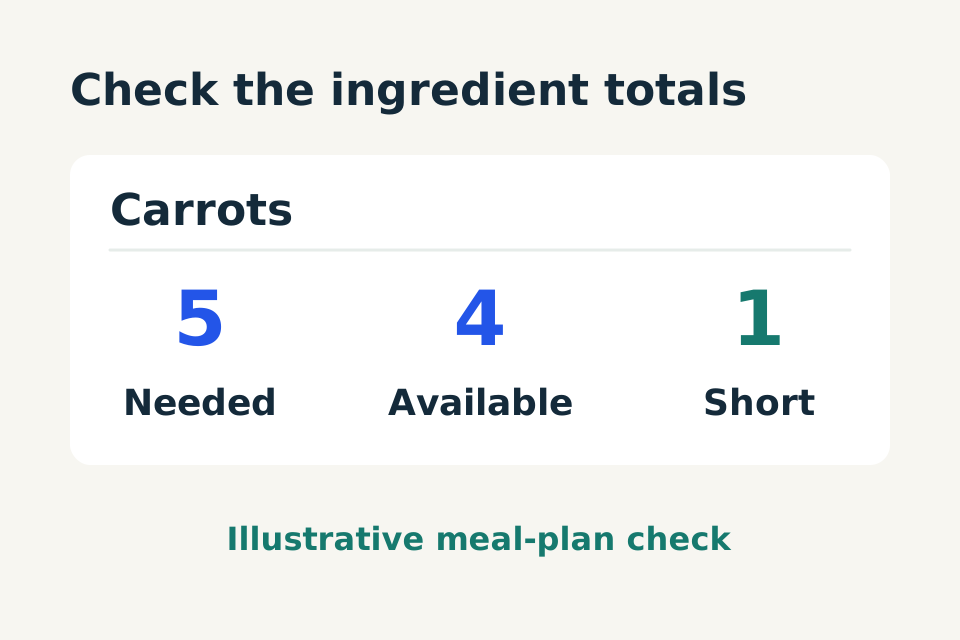
Suppose an illustrative plan uses two carrots on Monday and three on Wednesday. You have four. The ledger should show one carrot short, not claim everything is already covered. If it uses half a bag of peas, ask what quantity that means rather than accepting an undefined unit.
AI can organise the calculation, but it cannot see your cupboard unless you supply the information. A useful plan makes unknown quantities visible.
Choose dependable cooking instructions separately
A meal idea such as chickpea rice bowls is not a complete tested recipe. Select appropriate cooking instructions from a source you trust and check that they match your equipment and ingredients. Use relevant food-safety guidance for storage, reheating and safe cooking; do not treat a chatbot's confident timing as a safety guarantee.
This separation keeps the exercise focused: AI helps organise choices and ingredients; you verify how to prepare them. Avoid asking for substitutions that must be medically safe without qualified guidance.
Make the busy evening genuinely easier
Ask the tool to explain why the busy-night meal fits. Does it depend on something being prepared earlier? Does it require an oven you do not have? Does “20 minutes” exclude chopping or waiting?
A useful revision is:
Practice prompt
Tuesday now has only a short preparation window. Keep the other meals. Suggest a simpler Tuesday option, show any new ingredients and identify preparation that would need to happen earlier. Do not assume leftovers are available or safe to use.
Review the changed shopping list, not just the revised meal. Small substitutions can introduce extra purchases or leave an ingredient unused.
Shop from verified quantities and prices
Once you choose the meals, compare the draft list with the recipes and your cupboard. Group the final list by shop section if that helps. Check current prices yourself; a budget estimate without current local evidence is not a quoted total.
Do not place an order merely because the list looks complete. Check pack sizes, unavailable items, substitutions and the actual total. You control the purchase.
Keep the part that worked
After trying the plan, note what was easy and what created work. Maybe the useful part was ingredient reuse rather than the recipes themselves. Save that preference in a clean template, without unnecessary household details.
Next time, update the actual ingredients and schedule rather than reusing last week's assumptions. A short plan that you can check is a better starting point than a beautifully formatted month of meals you will not cook.
Next, fit those meal ideas into a realistic week with the weekly planning exercise.